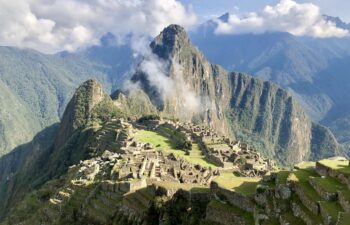
There have been various reports online and on social channels about flooding and landslides across Peru, notably in Lima, Arequipa and on the Inca Trail, which has been reported as being closed until Saturday. Reuters has reported THIS.
We have contacted LATA members in Peru and these are the updates we have received. We will continue to update here as further responses come from members.
PeruRail
yes, there have been some events in Arequipa and Cusco mainly, due to Fenómeno de El Niño. Inca trail has been closed since Aug 18th until further notice.
Trains are running regularly, according to schedules, and the citadel is opened as normal.
Rainforest Expeditions
Indeed, Peru is experiencing an El Niño event this year. We have had some rainfall in Lima, mainly affecting districts in the southern part of the city. It is worth clarifying that many of these areas were developed informally and therefore do not have infrastructure designed to cope with significant rainfall.
Regarding the rain itself, Lima, like most of Peru’s coastline, has a desert climate, so even relatively limited rainfall can feel quite intense and have a noticeable impact. The Inca Trail has indeed been temporarily closed as a precautionary measure, allowing the authorities to reinforce and prepare the trails ahead of the potential heavy rainfall associated with DANA Aníbal.
Mountain Lodges of Peru
I think we’ll be preparing general communication guidelines for the Peruvian adventure community to inform the trade.
In general terms, we will say how forecasters have announced this is the strongest Niño in 100 years, and there’s speculation and fanfare about it, we don’t think it should trigger a major alarm for the industry
We (as an industry) have been operating in remote places for more than 5 decades. Our (MLP) staff is properly trained, our equipment is top notch and we’re doubling down on procedures for this coming season. Chances are we will be adding a few weeks to the rainy season pause, and alternative routes have already been designed for all destinations.
Ecotone / CREES Manu
The Reuters report is accurate. El Niño is hitting this part of the continent hard, but the damage is concentrated on the coast: Lima, Arequipa, Moquegua and the Andean slopes down to the coast (that’s where the Inca Trail closure and highway closures are).On the Amazon side, where Manu and our Camanti-Soqtapata corridor operate, forecasts point to some unusually heavy rain for this time of year, but nothing near coastal levels. We’re monitoring routes and streams closely as a precaution, no disruption to tourist services at this stage.
Coltur
Yes — the images you have seen are real and are related to an unusual weather event that affected parts of Peru over the past few days.
It was caused by what is known as a DANA (an isolated low-pressure system in the upper atmosphere). Essentially, a mass of cold air becomes isolated at high altitude and, when it interacts with warmer, humid air below, it can create considerable atmospheric instability and unusually intense precipitation. In this particular case, the DANA brought heavy rain, as well as snow and hail at higher elevations, to parts of southern and central Peru. It also caused unusually heavy rainfall in some districts of Lima.
The images from Lima can look quite dramatic because our coast is extremely arid and we are simply not accustomed to heavy rain. Much of the city does not have the drainage infrastructure that cities with regular rainfall have, so even relatively short periods of intense rain can cause significant flooding in certain areas.The areas affected in Lima are not tourist areas, and tourism in the country is operating normally. The main exception at the moment is the Inca Trail, where some routes have been temporarily closed as a precaution following the unusually heavy rainfall and resulting landslides and overflowing waterways in the area.
The Inca Trail normally closes every February, during the peak of the rainy season, for maintenance and because of the weather conditions. A closure in August is unusual, but given the exceptional rainfall associated with this particular event, the authorities decided to temporarily suspend access to the affected routes for safety reasons.
Machu Picchu itself remains open and accessible.
PROMPERU
Regarding the recent rainfall in Lima, it was mainly associated with the influence of DANA Aníbal, whose impact lasted through August 19. This atmospheric system led to unusual rainfall along Peru’s central coast, including Lima. The DANA ended yesterday, so the conditions that caused these unusually heavy rains have now diminished.
At the same time, El Niño Costero remains under alert across the Asia-Pacific. However, the Ministry of Transports and Communications (MTC) reports refer to preventive measures in anticipation of potential rainfall and rising water levels, and do not report any impact on operations at Jorge Chávez International Airport. In fact, the MTC inspected the airport’s drainage and access routes to ensure the continuity and safety of airport operations.
Both the Minister and the Ministry have reassured the public that the necessary safety measures are in place to address this situation. You can read the original sources in Spanish here:
View South America
Thank you for asking about the situation in Peru now. Regarding the recent reports, the Ministry of Culture has indeed closed the Inca Trail. It is expected to reopen around August 23rd, but this remains unconfirmed as they are still assessing the damage on the route. Additionally, the Panamericana Sur highway in Arequipa has been affected, impacting overland travel. However, flight itineraries connecting Lima, Arequipa, and other cities are operating normally. Visits to Machu Picchu also continue as usual by train and alternative trekking routes.
No new rains are expected for now, as this situation was caused by a DANA (isolated depression at high levels), a natural phenomenon that affected the southern highlands of Peru for three days. Tourism operations are generally running normally, except for specific itineraries that involved the Inca Trail or the currently blocked overland routes.
Hotel Country Club Lima
Thank you for reaching out. Regarding the reports you have seen, I would like to provide some additional context, as the images are real, but some of the accompanying descriptions can give the impression that the situation is more widespread than it actually is. The image from Lima is indeed real and corresponds to Villa El Salvador, a district located well outside Lima’s main tourist areas. While the rainfall was unusually heavy for Lima and lasted for several hours, the extent of the flooding was caused by a combination of factors rather than by torrential rain alone.
Because Lima is a city where significant rainfall is uncommon, drainage infrastructure is limited in many areas. In Villa El Salvador, the sewer and drainage system became overwhelmed, causing water to accumulate in the streets and, in some areas, overflow from the sewage network. This significantly worsened the situation. Importantly, Villa El Salvador is far from the main tourist districts of Lima, and the principal tourism areas, hotels, attractions and services have not been affected by this incident.
Regarding the second image, this is also real and relates to the current situation on the Pan-American Highway in the Arequipa region. Heavy rainfall triggered mudslides and rockfalls along sections of the road, which resulted in traffic restrictions and significant delays. At this stage, the impact is mainly on travellers moving overland through southern Peru, particularly on the coastal road towards Arequipa. This does not mean that Arequipa itself is closed or that tourism services in the city have been suspended.
For international travellers flying between Lima and Arequipa, the impact is considerably more limited, as the disruption is affecting the highway rather than the city itself. Arequipa’s main tourist attractions, including the Historic Centre, monasteries, restaurants and hotels, are not located in the affected area and continue to operate.
We are continuing to monitor the situation closely and will keep you informed should there be any significant changes affecting tourist services.
Gaston-Sacaze DMC
The impacts are localised and being carefully monitored.
Inca Trail: Temporarily closed as a precautionary measure since August 18th to allow authorities to reinforce trails ahead of expected heavy rainfall. This is the main tourism impact.
Machu Picchu Citadel:Operating as normal – there is no official closure reported.
Wider context: El Niño is affecting the coast (Lima, Arequipa, southern districts) with localized flooding in informally developed areas that lack adequate drainage infrastructure. Amazon regions where most jungle tourism operates (Manu, etc.) are experiencing heavy rain but no disruption to tourist services.
Key point for members: This is not a general closure of Peru as a destination. Our major operators (PeruRail, Mountain Lodges of Peru, Rainforest Expeditions) report trains running on schedule, guides are trained for these conditions, and alternative trekking routes have already been designed. The industry has safely operated in these conditions for decades.
Explorandes
Thanks for reaching out regarding this unfortunate news. We had severe weather for a few days between 16th and 19th of August due to a rare atmospheric phenomenon called a DANA.
DANA Aníbal was an isolated high-level atmospheric depression (a cold air mass at 5 to 10 kilometers high) that developed over the Pacific Ocean near Peru and Chile. Interacting with warmer, humid air, it caused heavy rains, snow, hail, and strong winds across Peru’s central and southern highlands and coastal drizzles which caused some parts of Lima (in the periphery mostly, not near the districts where tourists normally go) and a part of the Panamerican Highway in the coast of Arequipa (far from the city and the Colca Canyon tourist circuit) to flood.
Regarding the Reuters article, it’s unfortunate that the headline is so misleading. The shutdown of access was to the Inca Trail, not to the whole site of Machu Picchu. About 500 tourists per day enter the inca trail vs 5,600 that enter Machu Picchu via full day visits, which were unaffected. While technically accurate, the headline is definitely misleading. Unfortunate, really.
The weather has improved significantly here in the Sacred Valley since the 18th which was the peak of intensity of rains due to DANA Anibal.
Amazonas Explorer
yes the weather here in the Andes over the last few days has caused quite a bit of chaos! And boy, it’s been cold here in Cusco!
However, the sun is out and business is pretty much back to normal here in Cusco. For now…
Yes, as a precaution and to enable a cleanup, the full four-day Inca Trail is closed until Saturday.
The heavy rain over the past few days caused some flooding and landslides. The river between Huallaybamba and Llactapata (Day 1 or 2 of the Inca Trail depending on the route you are taking) burst its banks, making this section of the Inca Trail virtually impassable. Also, a landslide near the Lluluchupampa campsite (Day 2) washed away some of this campsite and made the route impassable and the campsite unusable.
This should all be cleared up by Saturday.
Salcantay, Lares, Choquequirao, Ausangate treks are all open but trekkers are advised to take special care and extra warm clothing as there is still quite a bit of snow, and the trails are slippery.
Vinicunca Rainbow Mountain, Palccoyo and Pallay Puncho are open but they were covered in snow for the last two days, so you won’t see much!
The KM 104 Royal Inca Trail and all circuits in Machu Picchu have remained open and the INC is helping any one affected by the inca trail closure to still access Machu Picchu without spoiling their trip.
Not yet reported in the international press, is that the recent snow and extreme cold weather near and on the “Dead Woman’s” Pass of ther Inca trail, as well as on the main Salkantay Pass, resulted in the very sad loss of life of one porter on the Inca Trail and one muleteer on the Salcantay trek, due to hypothermia and not having the correct gear to deal with the extreme cold. There is general outrage about why this happened. I could name the utter cowboy companies that allowed this to happen if you want, but it will probably all be washed under the bridge. But if you pay peanuts, you get monkeys and corners are cut and people get hurt, or in this case, die. Nuff said
As usual, Reuters is partially correct but not entirely correct! I guess sensational headlines, always win over true facts ….
El Niño is not expected to affect Peru until late November.
This recent chaos was caused by a weather effect called DANA (Depresión Aislada en Niveles Altos)
Casa Andina
We’re still welcoming you to our destinations
Following the recent rainfall in some regions of the country, we’re pleased to let you know that our hotels continue to operate normally and welcome our guests.
In Lima, the main tourist areas, including Miraflores, Barranco, and the Historic Center, remain fully operational, allowing visitors to enjoy the city as usual. In Arequipa, access to the Historic Center and the city’s main urban tourist areas remains open and operational. In Cusco, our hotels continue to operate normally. At present, the temporary closure only affects Routes 1, 2, and 3 of the Inca Trail network to Machu Picchu until August 26, while authorities continue to monitor safety conditions.
We will continue to monitor the situation and keep you informed of any updates, so you can enjoy your trip with peace of mind. This information is current as of August 24.
Aqua Expeditions
Iquitos & the Peruvian Amazon – Travel Update – 29 August
Following recent reports of flooding and landslides in parts of Peru, we would like to reassure our travel partners that Iquitos and the Peruvian Amazon continue to operate as normal.
The region is currently in its annual low-water season, with river levels gradually receding in line with the expected seasonal pattern. There have been no unusual conditions reported in Iquitos or in the areas where our Amazon operations take place.
Importantly, the current conditions have no impact on the operations of our vessels navigating the Peruvian Amazon. Our expeditions continue to operate as scheduled, with navigation, access and guest services remaining fully operational. There have been no reported disruptions to tourism activities in the region as a result of flooding or landslides.
We continue to monitor local conditions closely and remain in regular contact with our teams on the ground. Should there be any developments that may affect travel plans or our operations, we will ensure our partners are informed promptly.
For now, guests can continue to travel to Iquitos and explore the Peruvian Amazon as planned, with our vessels sailing normally and our teams ready to welcome guests and deliver the exceptional experience for which the region is known.
We remain committed to keeping our travel partners informed and ensuring every guest can travel with confidence.